Skip to content

There is a widespread belief that, for any pain, it is enough to take a bag of frozen peas from the bottom of the refrigerator. But if we enter the realm of applied physiology, the reality is much more complex. Thermotherapy – and its counterpart, cryotherapy – are not just textbook remedies; they are thermal tools that modify the behavior of our blood flow and our nervous system.
Knowing when to apply heat or cold is the difference between shortening an injury by half or perpetuating inflammation unnecessarily.
Circulatory overclocking: what happens when we apply heat?
Thermotherapy essentially works by manipulating the diameter of your blood vessels. By applying a controlled heat source to tissue (such as ligaments or muscles), we cause vasodilation.
What does this mean on a practical level? You are opening the floodgates. As the vessels dilate, the blood supply increases, and with it, the arrival of oxygen and essential nutrients to repair tissue micro-tears. But there is a more interesting factor: the effect on thermoreceptors. Heat raises the pain threshold, “tricking” the nervous system into relaxing the muscles and reducing stiffness.
It is the perfect ally for those dull and persistent pains, or to prepare the body before an activity. If you feel that a muscle is “blocked”, heat is the key.
Cryotherapy: the handbrake for inflammation
At the other extreme we have cold. Here the process is the reverse: vasoconstriction. When you apply cold after an impact or overexertion, you are sending an emergency signal to reduce blood flow to that specific area.
This is crucial in the acute phases (the first 48-72 hours). Cold acts as a potent analgesic because it slows down nerve conduction. It is literally numbing the pain while preventing the inflammation from getting out of hand. If there is swelling or a “hot” sensation in the joint, cold is non-negotiable.
The protocol of use: not everything goes
For thermotherapy to be effective and not just a placebo, the “how” matters as much as the exposure time. It is not a matter of applying extreme temperatures for hours, but of seeking the right stimulus in the window of time where the body is most receptive.
-
The heat range: One minute of microwaving is enough to reach a therapeutic temperature. The objective is that the heat penetrates the tissue without burning the dermis, relaxing the collagen fibers to gain mobility.
-
The cold window: Two hours of pre-cooling allows for gradual thermal transfer. Here we do not seek to freeze the skin, but to cool the underlying tissue to “turn off” the pain signal.
When to choose each side?
The golden rule to avoid making mistakes is simple:
-
Is it swollen, red or just passed? Go for the cold. You need to contain the inflammatory response and keep the edema from spreading.
-
Is it stiff, tight or an old annoyance? Go for the heat. You need the blood to circulate and the tissues to regain their natural elasticity.
In the end, thermotherapy is nothing more than a form of assisted bioregulation. By intervening directly in the repair processes of our body, we optimize recovery times that would naturally be much slower.
The right tool for every area
Mastering temperature is only half the job; the other half is ensuring that the relief is delivered exactly where it is needed. At Recovery Plus we have designed a specific range so that thermotherapy adapts to your anatomy and not the other way around.
We have four different models designed to work your body in a differential way:
-
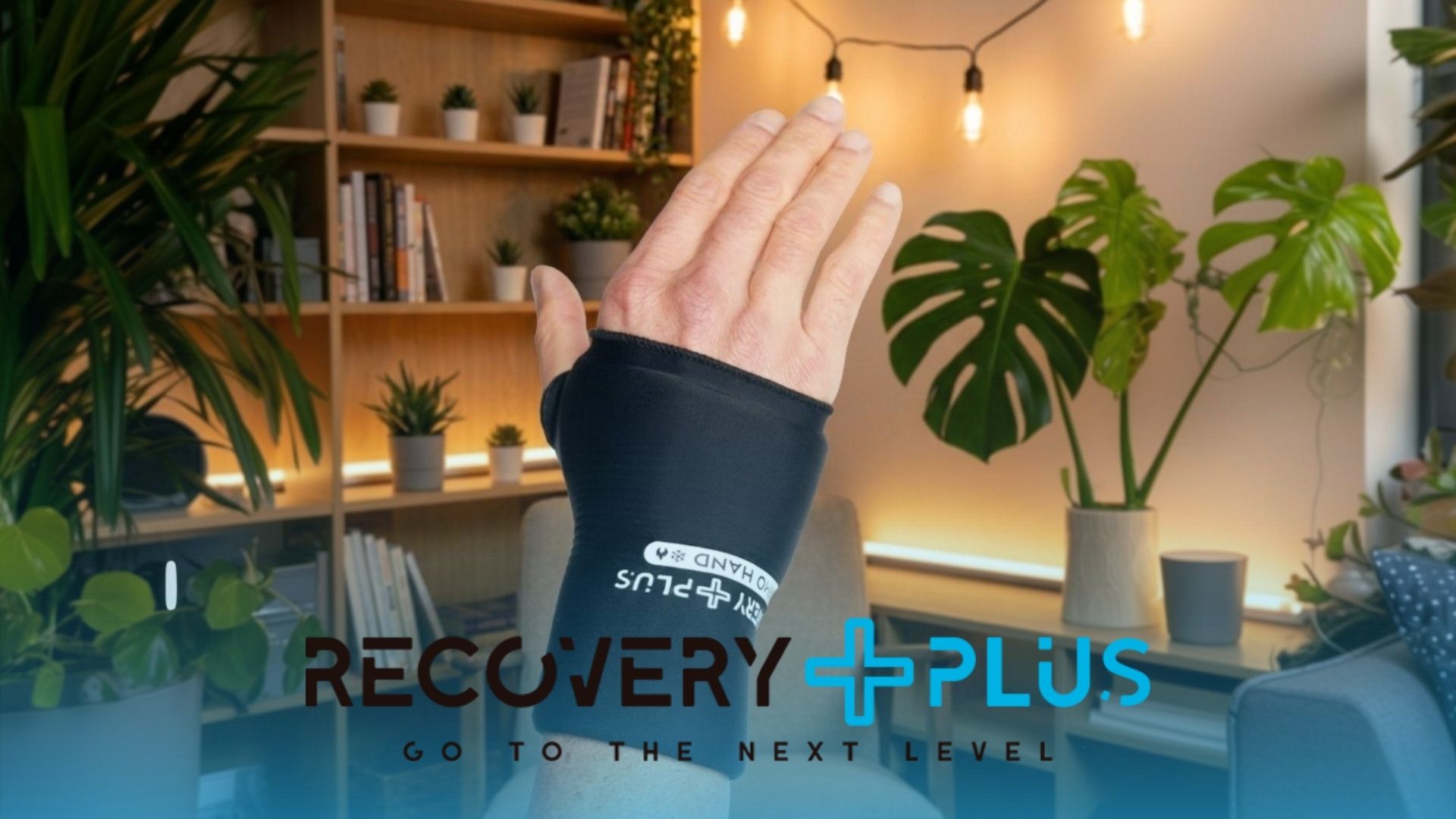
Wristband: Focused thermal relief for carpal tunnel problems, tendinitis or fatigue due to intensive use of screens.
-
Ankle brace: Stability and control of inflammation after sprains or days of physical stress.
-
Sleeve: Wrap-around coverage for elbows or knees, ideal for treating joint and muscle ailments in a comprehensive manner.
-
Cap: Specifically designed to relieve migraines and cranial tension through gentle pressure and controlled temperature.
Whatever your weakness, there is a thermal protocol waiting to bring you back to 100%.
Do you want to know which model is ideal for your routine? Find out here